

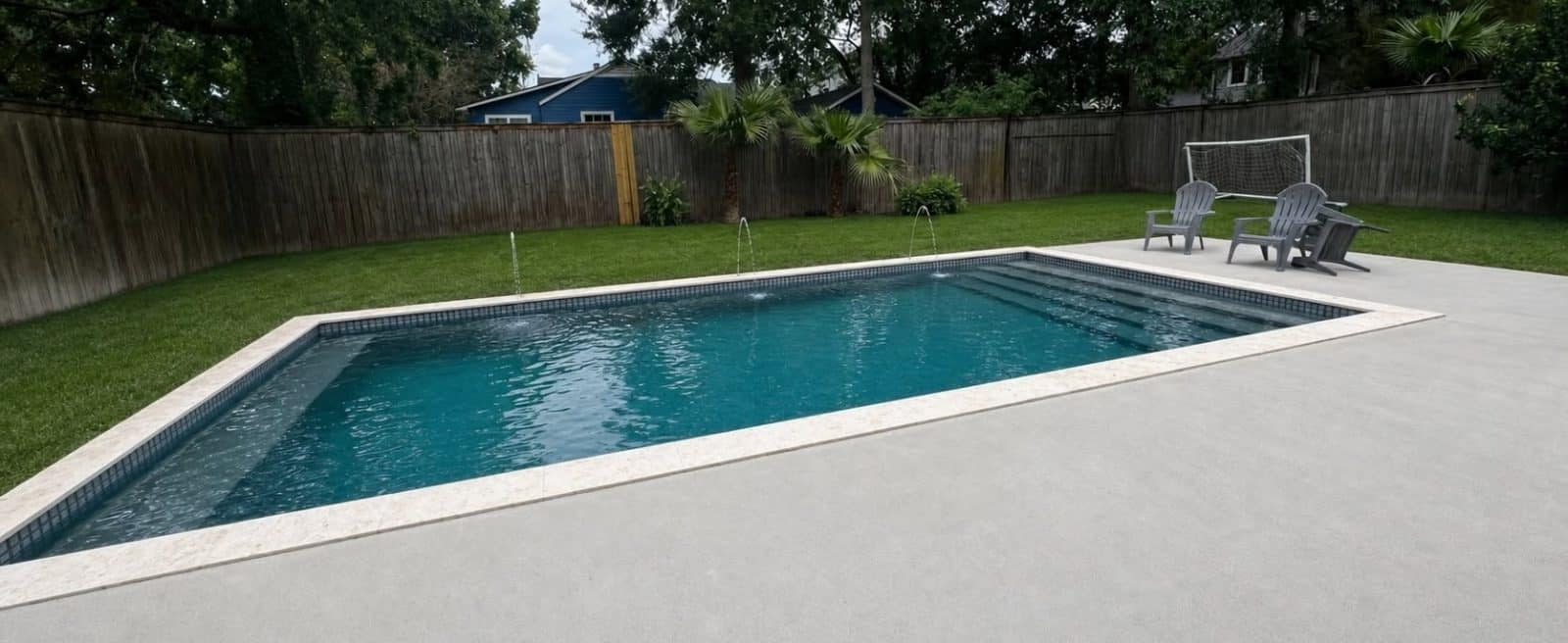
Adding an in-ground pool to your Baton Rouge home involves far more than picking a shape and a finish color. You need a builder who understands East Baton Rouge Parish permitting, local soil and drainage conditions, and what it takes to deliver a finished backyard that matches what you pictured. The right pool builders in Baton Rouge guide you through every step, from the first design meeting to the moment you take your first swim.
This guide gives you a framework for comparing Baton Rouge pool builders: how to verify permitting support, read an estimate properly, judge installation scope, compare warranties, and spot genuine custom gunite expertise.
Quick answer: what separates a good Baton Rouge pool builder from a risky one
A qualified Baton Rouge pool builder does five things: pulls and manages your East Baton Rouge Parish permits, gives you a line-item estimate with no “TBD” on major scope, handles electrical and gas connections in-house or through their own licensed subs, backs the work with a written structural and workmanship warranty, and ties your payments to completed milestones instead of calendar dates. If a builder cannot clearly explain all five, keep looking.
Key takeaways
- Verify that your builder handles East Baton Rouge Parish permits, inspections, and the required safety barrier as part of their service — not as your homework.
- Confirm which permitting authority actually covers your address. Parts of southeast East Baton Rouge Parish now fall under the City of St. George, which has its own pool permit process and a stricter 60-inch fence requirement.
- Get a detailed, itemized estimate covering excavation, electrical hookups, decking, equipment, and all finishes before signing anything.
- Compare structural, surface, and equipment warranties separately, and confirm who backs each one.
- Duplessis Pools offers all-inclusive installation packages with full permitting support and extended workmanship warranty options up to four years, and has been named to the Pool & Spa News Top 50 Builders list in both 2025 and 2026.
- Favor builders who own the entire scope: site prep, plumbing, electrical, startup, and a final walkthrough with equipment training.
Why choosing the right pool builder matters in Baton Rouge
A pool is one of the largest investments you will make in your property, and unlike furniture or landscaping, a poorly built pool creates problems that are expensive and disruptive to fix. The concrete shell, plumbing, electrical bonding, and drainage all have to be right the first time, because correcting them later means breaking concrete.
Baton Rouge adds challenges that out-of-state or inexperienced builders often underestimate. Heavy clay soils that shrink and swell, high water tables in low-lying neighborhoods, heavy rainfall, and long, hot summers all affect how a pool should be engineered, drained, and equipped. A builder with real local experience plans for hydrostatic pressure, designs deck drainage that moves water away from your foundation, and specs equipment sized for Louisiana’s extended swim season.
The relationship also outlasts construction. You will rely on this builder for warranty service, startup support, and possibly ongoing maintenance. Choosing well now is the cheapest insurance you can buy.
How does the Baton Rouge pool permitting process work?
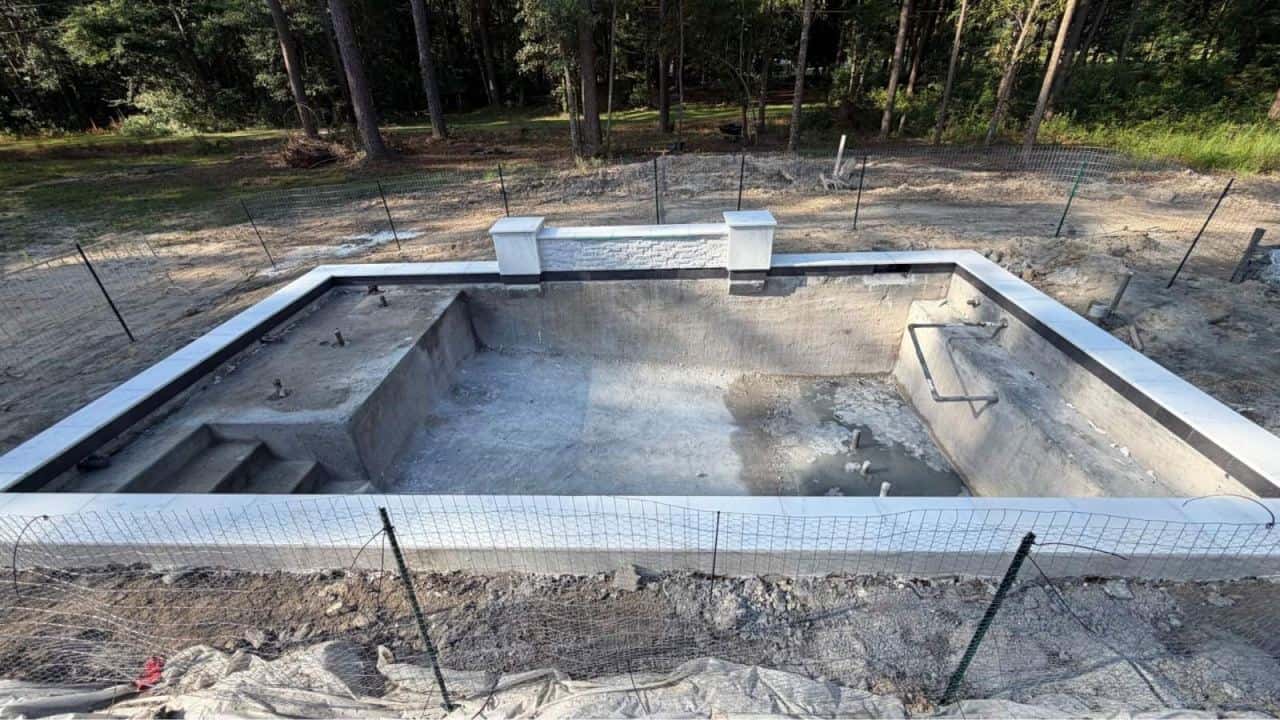
Before any digging begins, your pool project needs approved permits from the local building authority. Permitting exists to confirm your pool meets construction, electrical, and child-safety codes — and an unpermitted pool can create real problems when you sell your home.
Which permitting authority covers your address?
This is the first question to settle, and it trips up homeowners in 2026. Most of the parish is served by the City-Parish Department of Development, 300 N. 10th Street, Baton Rouge, LA 70802 (BRLA.gov). However, addresses inside the newly incorporated City of St. George are permitted through St. George, which publishes its own swimming pool permit application and its own requirements.
Ask any builder you interview which authority your address falls under. A builder who does not know — or who assumes City-Parish for every job — has not been working the whole market.
What permits does an in-ground pool require?
A typical in-ground pool in East Baton Rouge Parish needs a building permit for the pool structure, an electrical permit for pumps, lights, heaters, and bonding, and often a separate fence or barrier permit, since the barrier is inspected before the pool can be approved for use (BRLA.gov). Decking, covered patios, gas lines, and outdoor kitchens are commonly permitted separately.
Submittals generally include a scaled site plan showing the pool location relative to property lines, setbacks and servitudes, the barrier layout, equipment pad location, grading and drainage, and electrical details. In St. George, a flood zone determination application and an erosion control plan are also part of the package (City of St. George).
What are the pool fence and safety barrier requirements?
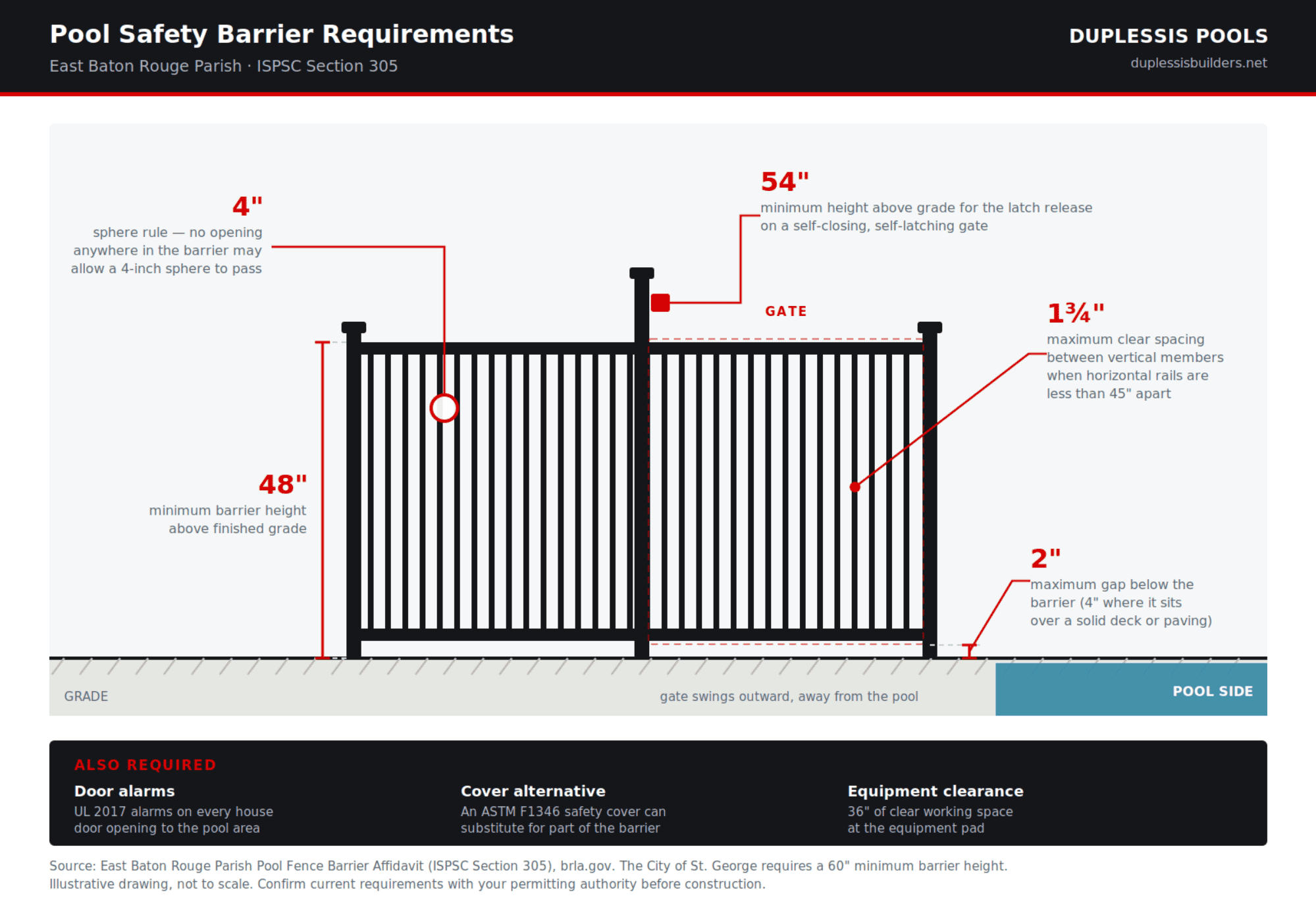
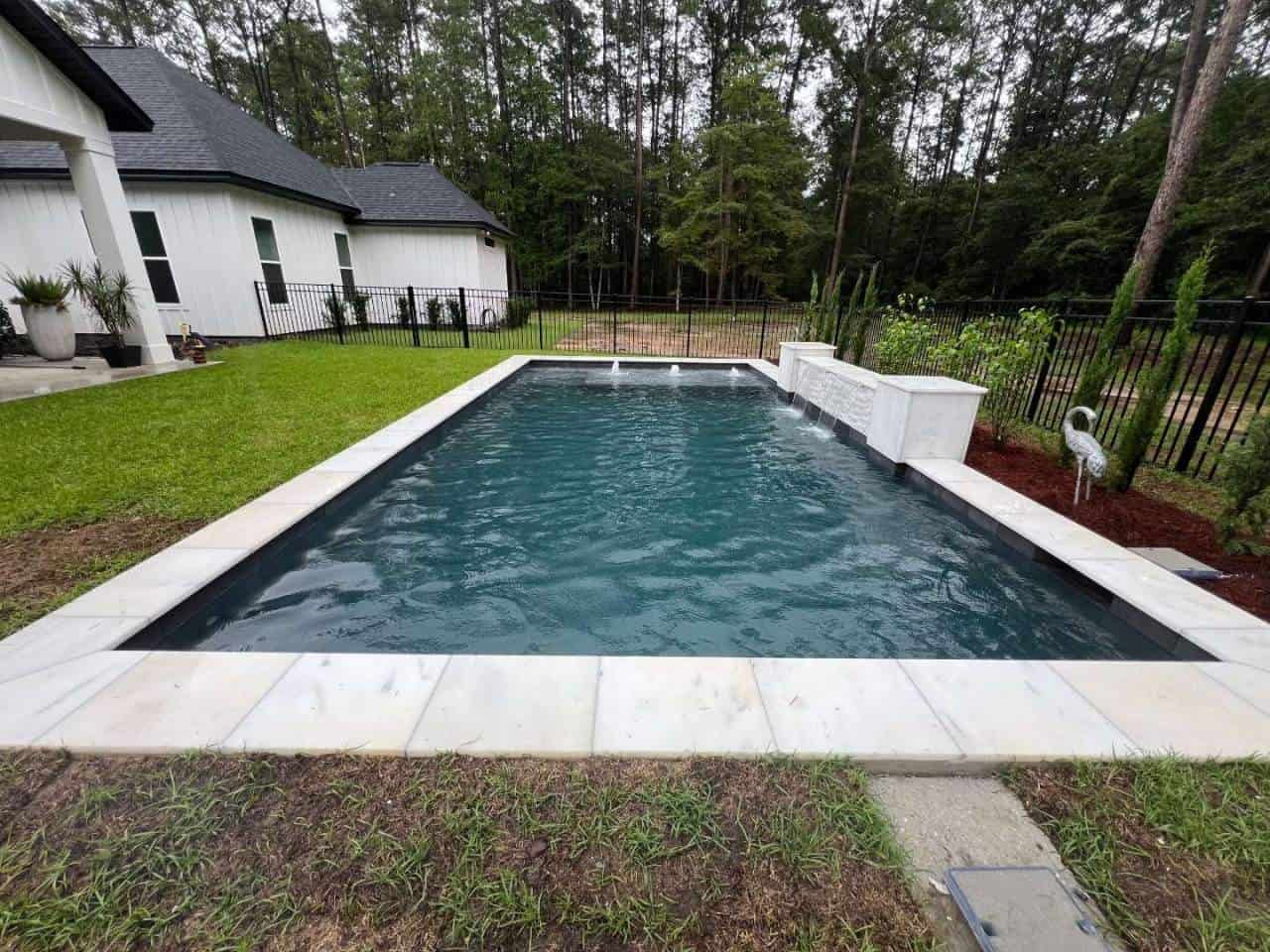
East Baton Rouge Parish enforces barrier rules from the International Swimming Pool and Spa Code (ISPSC) Section 305. The core requirements (BRLA.gov Pool Fence Barrier Affidavit):
- Barrier top at least 48 inches above grade.
- Maximum gap beneath the barrier of 2 inches over dirt, or 4 inches over paving.
- No opening may pass a 4-inch sphere.
- Where horizontal rails are less than 45 inches apart, they must be on the pool side, and spacing between vertical members cannot exceed 1¾ inches.
- Gates must swing outward away from the pool, be self-closing, and be self-latching.
- Latch release at least 54 inches above grade — or, if lower, on the pool side at least 3 inches below the top of the gate, with no opening larger than ½ inch within 18 inches of the release.
- If a wall of the house serves as part of the barrier, doors and operable windows with a sill under 48 inches must have an audible alarm listed to UL 2017. A standard home security system does not satisfy this; a powered safety cover meeting ASTM F1346 is the listed alternative.
- Pool equipment located outside the barrier must sit at least 36 inches from it.
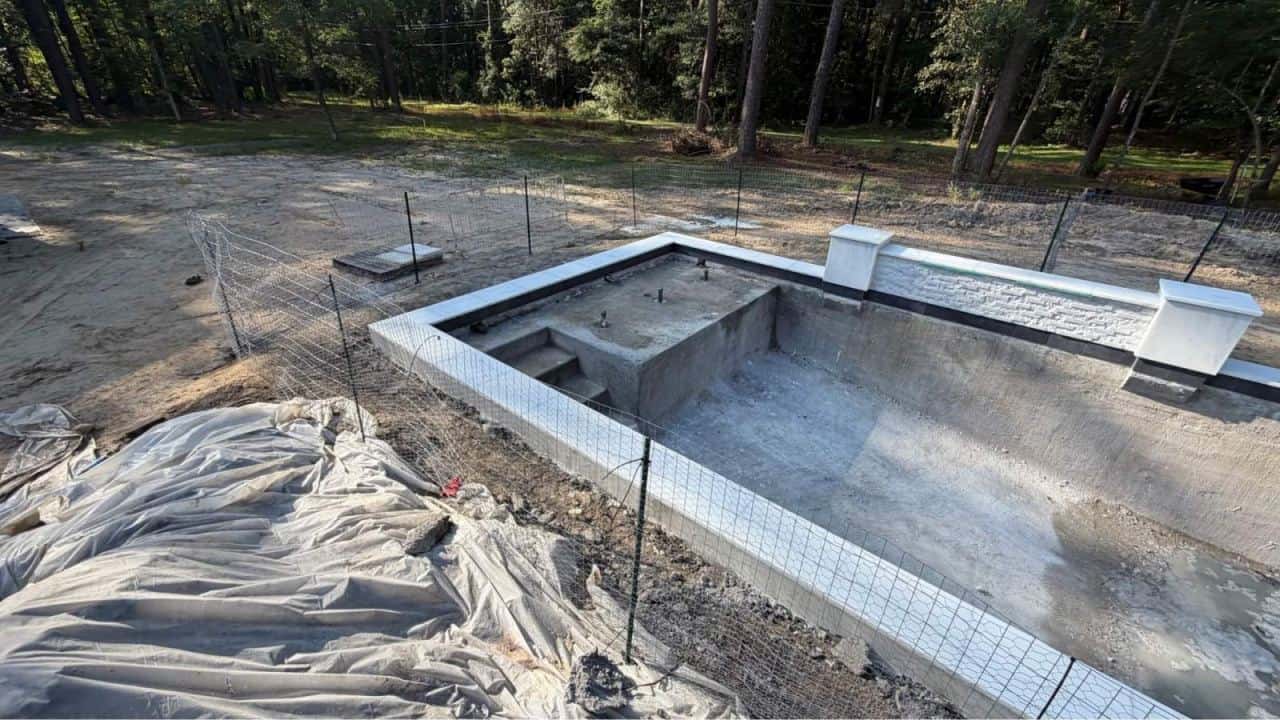
- Construction fencing of at least 4 feet is required from the moment excavation starts until the permanent barrier is finished.
Important: if your address is in the City of St. George, the final inspection requires a minimum 60-inch barrier — a full foot taller than the City-Parish minimum (City of St. George). Budget for this before you choose fencing.
How should a good builder handle permits?
A reputable custom pool builder prepares the drawings, submits the applications, coordinates the inspection sequence, and answers plan-review comments on your behalf. In practice that means the excavation or footing inspection, rough plumbing, electrical bonding, barrier, and final inspection all get scheduled and passed without you making a single phone call.
When comparing builders, ask directly: *who pulls the permits, and who schedules the inspections?* Some builders push this back to the homeowner, which reliably creates delays. Builders who include full permitting support in their package run smoother jobs with fewer stop-work surprises.
How do you evaluate pool pricing and estimates?
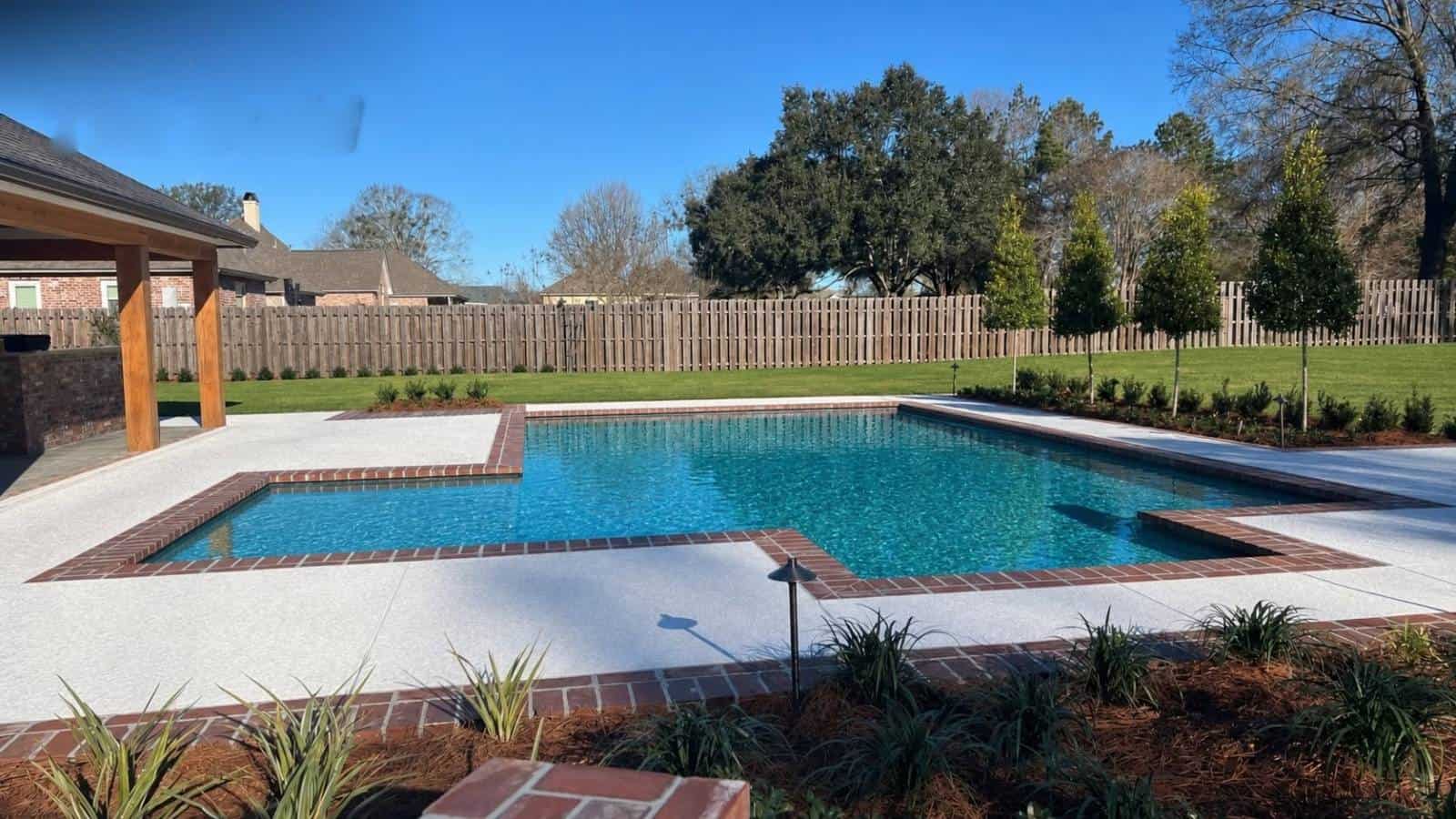
Evaluate a pool estimate by scope, not by the bottom-line number. The lowest bid is usually the one with the most exclusions, and those exclusions become change orders once the hole is already dug.
What should a pool estimate include?
A complete estimate should cover everything required to hand you a finished, swimmable pool:
- Excavation and spoil removal
- Pool shell construction (gunite or fiberglass)
- Steel, plumbing rough-in, and electrical bonding
- Interior finish (plaster, pebble, or quartz)
- Coping and waterline tile
- Decking material and installation
- Equipment: pump, filter, heater, sanitation, automation
- Electrical hookups and any gas line for a heater
- Permit fees and inspection coordination
- Water fill, startup, and chemistry balancing
- Homeowner orientation on equipment operation
What hidden pool costs should you watch for?
The most common exclusions on a low bid are electrical hookup, the gas line for a heater, permit fees, the concrete deck, spoil haul-off, and the safety barrier. Any one of them can add thousands. Ask for each to be either priced in or explicitly listed as excluded in writing.
Site conditions matter too. Limited backyard access that forces smaller equipment or hand-digging, rock or unstable clay, high water table, and significant grading all move the number. A builder who walks the site before quoting is far more likely to give you a figure that holds.
Why do all-inclusive pool packages reduce risk?
All-inclusive packages reduce risk because they convert unknowns into a fixed, disclosed price before construction starts. When excavation, permitting, electrical hookups, and equipment are bundled, there is no gray area about who pays for what.
Duplessis Pools builds custom gunite pools with full installation, permitting, electrical hookups, and excavation included in its all-inclusive pool packages, so homeowners see total investment upfront rather than discovering it in phases.
What does full-service pool installation actually include?
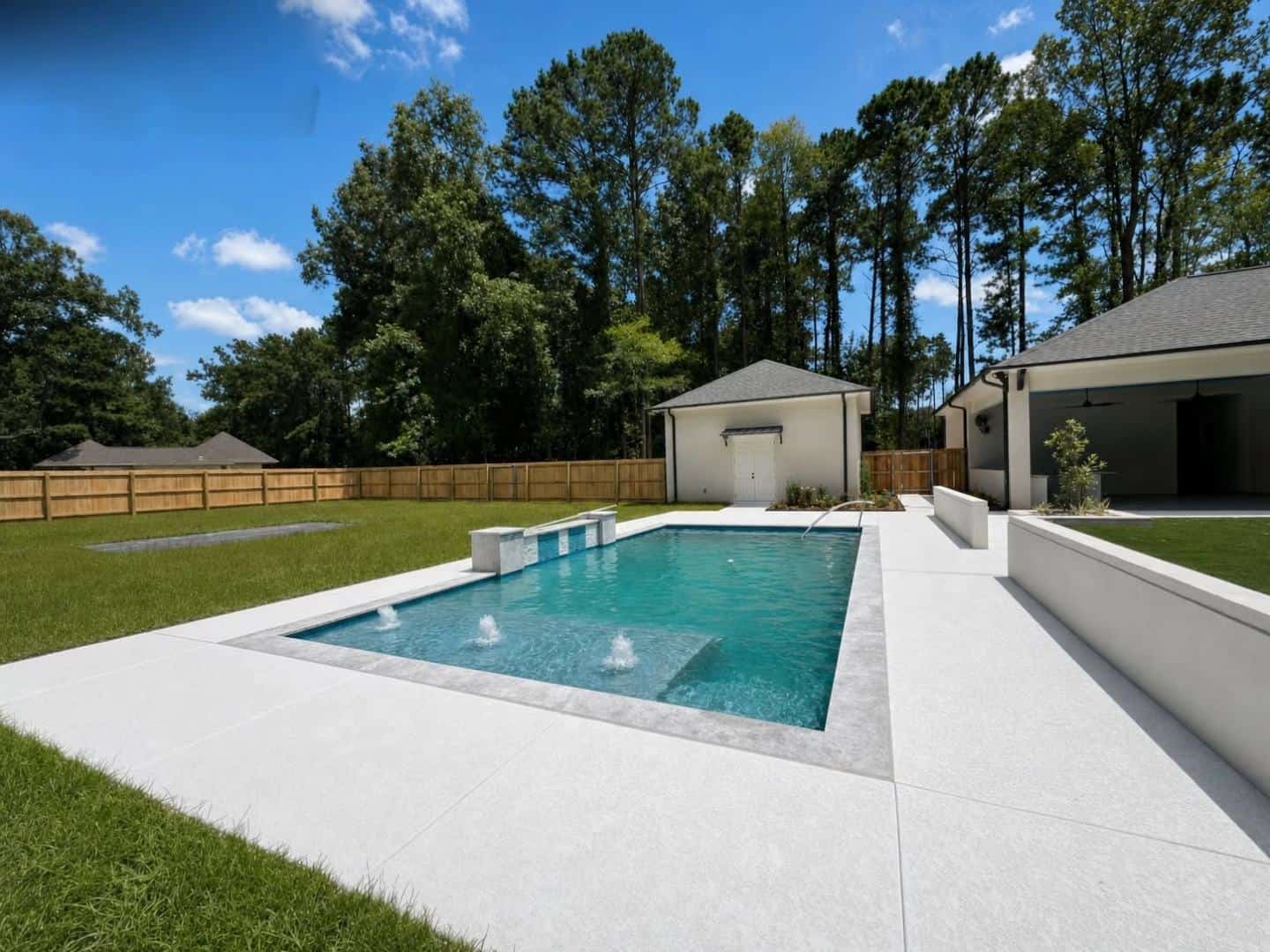
Full-service installation means one company owns every phase from design through the final walkthrough, coordinating all trades itself. The alternative — a builder who digs and shoots the shell while you hire your own electrician, fence company, and concrete contractor — puts scheduling risk and liability on you.
A genuine full-service scope covers:
- Initial consultation and on-site assessment
- Custom design with 3D visualization
- Material selections for finish, tile, and coping
- Permit applications and inspection coordination
- Site preparation and excavation
- Structural work: forms, rebar, plumbing rough-in, gunite or shotcrete
- Equipment set and electrical connections, including bonding
- Interior finish and tile work
- Decking and coping installation
- Fill, startup, and water chemistry balancing
- Homeowner orientation on equipment and maintenance
What questions should you ask about installation scope?
- Do you handle all electrical and gas connections, or do I hire separate contractors?
- Who schedules and meets the parish inspectors?
- Is decking included in this estimate, or quoted separately?
- Is the safety barrier included, and does it meet the requirement for my jurisdiction?
- What happens if we hit rock, unstable soil, or an unmarked utility?
- How many startup visits are included, and what do they cover?
- Where does the spoil from excavation go, and is haul-off in the price?
Why does design consultation matter?
Design consultation is where the money is either well spent or wasted, because placement decisions cannot be undone once the shell is shot. A good designer accounts for sun exposure through the day, sightlines from your kitchen and living room, prevailing wind, how the pool relates to your existing patio, setbacks and servitudes, and where equipment noise will land relative to your bedrooms and your neighbor’s.
Duplessis Pools offers design consultation and 3D planning so you can see the pool in context before excavation, which is when changes are still free.
How do you compare pool builder warranties in Louisiana?
Compare warranties in three separate buckets — structure, surface, and equipment — because they are backed by different parties and fail for different reasons.
| Warranty type | What it covers | Typically backed by | What voids it |
|---|---|---|---|
| Structural | The shell’s integrity and ability to hold water | The builder | Ground movement outside spec, unapproved modifications, draining the pool improperly |
| Surface / finish | Plaster, pebble, quartz, tile | Builder or finish applicator | Out-of-balance water chemistry, improper startup |
| Equipment | Pump, filter, heater, salt cell, automation | The equipment manufacturer | Improper installation, no registration, unauthorized service |
What should you look for in warranty terms?
Read the definitions, not the headline number. “Lifetime” usually means *for as long as the original owner owns the pool*. “Limited” signals exclusions worth reading line by line. “Pro-rated” means coverage value declines each year, so a 10-year pro-rated warranty may be worth very little in year eight.
Ask about each warranty:
- What is covered, and for exactly how long?
- What conditions void it? (Water chemistry clauses are the most common trap on surface warranties.)
- Is it transferable if I sell the home?
- Who backs it — the manufacturer, the builder, or both?
- What is the claim process, and what is the typical response time?
What is an extended workmanship warranty?
A workmanship warranty covers problems caused by how the pool was built rather than defects in the materials themselves — a plumbing joint that seeps, a bond that was missed, tile that was set poorly. This matters because most issues that surface in the first few years are installation-related, not material failures.
Duplessis Pools offers extended workmanship warranty options up to four years, beyond standard manufacturer coverage.
How do you evaluate custom in-ground pool expertise?
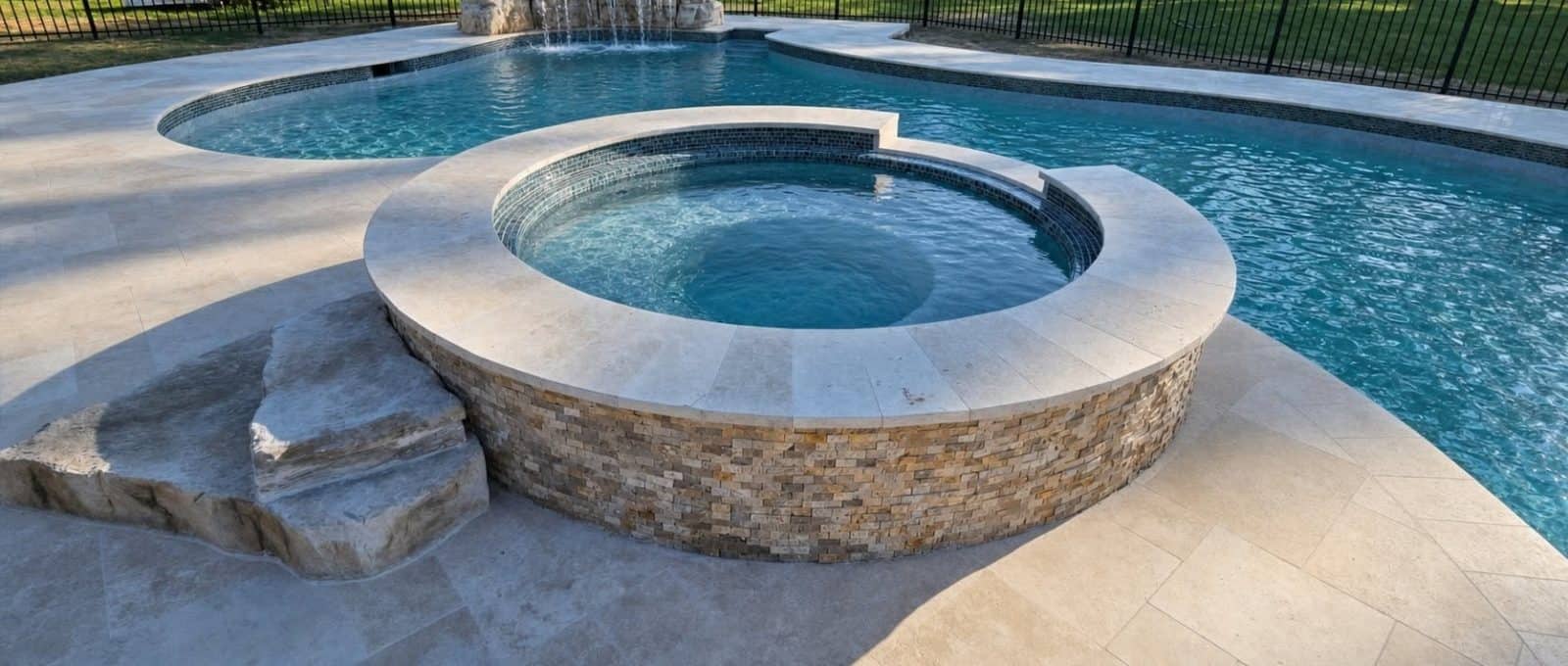
Judge expertise by the range of what a builder has actually completed, not by the size of their portfolio. A hundred pools that are all the same rectangle does not demonstrate custom capability.
Gunite vs. fiberglass: which is right for your yard?
Choose gunite if you want full control over shape, size, depth, and features; choose fiberglass if speed of installation and a low-maintenance surface matter more than design freedom (Duplessis Pools).
Gunite (concrete) pools are formed and sprayed on site, so any shape, depth, tanning ledge, spa spillover, or beach entry is possible. They are extremely durable and can be refinished multiple times over their lifespan. The tradeoff is a longer build.
Fiberglass pools arrive as a manufactured shell that is set into the excavation, which compresses the timeline substantially. The gelcoat surface is smooth and resists algae, but you are choosing from predetermined shapes and sizes, and the shell has to physically fit through your yard access.
What are the signs of real custom pool expertise?
- A portfolio showing varied shapes, elevations, and site conditions — not one design repeated
- Completed work with tanning ledges, raised spas, spillovers, water features, and automation
- Demonstrated understanding of local clay soils, water table, and drainage
- Long-standing relationships with licensed electrical, plumbing, and masonry subs
- Verifiable third-party recognition and industry certifications
Duplessis Pools has earned a place on the Pool & Spa News / Hayward Top 50 Builders list — the industry’s national ranking — in back-to-back years, 2025 and 2026, and built 150 pools in 2025. That volume matters when you are comparing builders: it means established crews, established supplier relationships, and a permitting process the team runs every week rather than occasionally.
Why does local experience matter so much here?
Louisiana conditions are not generic. Expansive clay soils move with moisture cycles, the water table sits high in parts of the parish, and rainfall totals mean deck drainage has to be designed rather than assumed. A builder who has worked the parish knows which inspectors scrutinize bonding, how long plan review is currently running, and where high water forces a different dewatering approach during excavation. They also know that Louisiana’s long swim season changes the heater and sanitation math.
How long does pool construction take in Baton Rouge?
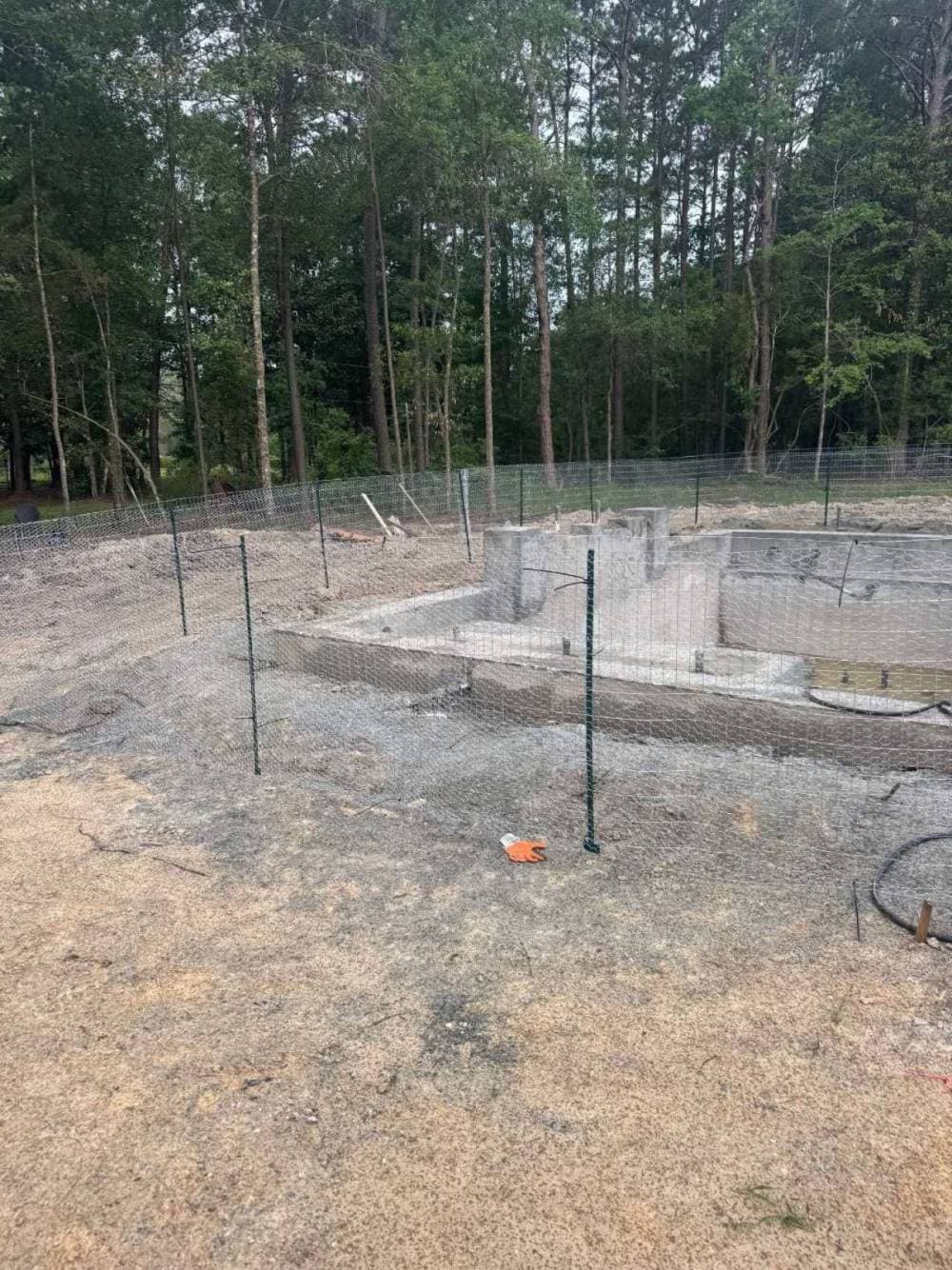
A custom gunite pool in the Baton Rouge area typically runs 8 to 12 weeks from excavation to completion, with permitting adding time before that. Fiberglass installations are usually faster.
| Phase | Typical duration | What happens |
|---|---|---|
| Design and planning | 2–4 weeks | Consultation, site assessment, design, selections, contract |
| Permitting | 1–4 weeks | Application, plan review, corrections, approval |
| Excavation | 1–3 days | Layout, dig, spoil removal |
| Structural | 1–2 weeks | Forms, steel, plumbing rough-in, bonding, gunite |
| Curing | 1–2 weeks | Shell gains strength; watering the shell as directed |
| Finish work | 2–4 weeks | Coping, tile, decking, equipment set, interior finish |
| Startup | ~1 week | Fill, chemistry balance, homeowner training |
What can extend your timeline?
Rain during excavation or concrete work is the most common delay in this market, followed by plan-review backlogs, lead times on specialty tile or finishes, mid-build design changes, and unexpected site conditions like rock or high water. A builder worth hiring gives you a realistic range upfront and tells you the day something slips, not the week after.
How should you compare pool builders side by side?
Score every builder on the same criteria, using the same questions, and write the answers down. Memory blurs after the third consultation.
Builder comparison checklist
For each builder, document:
- Louisiana contractor license number and current general liability + workers’ comp coverage
- Years in business and number of pools completed annually
- Exactly what the estimate includes versus excludes
- Permitting approach: builder-managed or homeowner responsibility
- Warranty terms for structure, surface, and equipment, and who backs each
- Payment schedule — milestone-based or calendar-based
- Post-construction service and startup support
- References from customers who have actually used warranty service
- Reviews that mention communication and problem resolution, not just the finished photo
Ask every builder the same questions
- How do you handle permits and inspections, and which authority covers my address?
- What is included in your standard package, and what costs extra?
- What warranty do you offer, and who backs each part of it?
- How many projects do you run at once, and how many crews do you have?
- Who is my single point of contact during construction?
- How are change orders priced and approved?
- What is your payment schedule tied to?
- What support do you offer after the pool is finished?
Visit completed projects and a showroom
Website photography is styled and shot in the best light of the day. Ask to see a pool finished within the last year and, if possible, one under construction — the tidiness of an active jobsite tells you a lot.
A showroom visit also makes material selection far easier. Duplessis Pools operates a showroom where you can compare plaster and pebble finishes, tile, and coping side by side, which is the only reliable way to judge how a finish will read in full Louisiana sun.
What are the red flags when hiring a pool builder?
The warning signs below show up before the contract is signed, which is the only time they are cheap to act on.
Vague or incomplete estimates. Any major line item marked “TBD” or “as needed” is a future change order. Ask until you get a number or a written exclusion.
Large upfront deposits. A deposit to hold your place on the schedule is normal. A builder asking for a large share of the total before any work begins may be funding someone else’s project with your money. Payments should follow completed milestones — excavation, gunite, finish, completion.
No written contract, or vague terms. Scope, materials, payment schedule, change-order process, timeline, and warranty all belong in writing. A handshake deal is a decision to have no recourse.
Poor communication before you sign. Slow callbacks, evasive answers, and impatience with your questions are a preview of how the job will run once your deposit is spent.
No license, no insurance, or “we’ll add you later.” Verify the license number and ask for a certificate of insurance sent directly from the agent.
Pressure to skip the permit. A builder who offers to “save you the permit fee” is offering to create a code-compliance problem that surfaces at resale.
How should you plan a pool as part of a complete backyard?
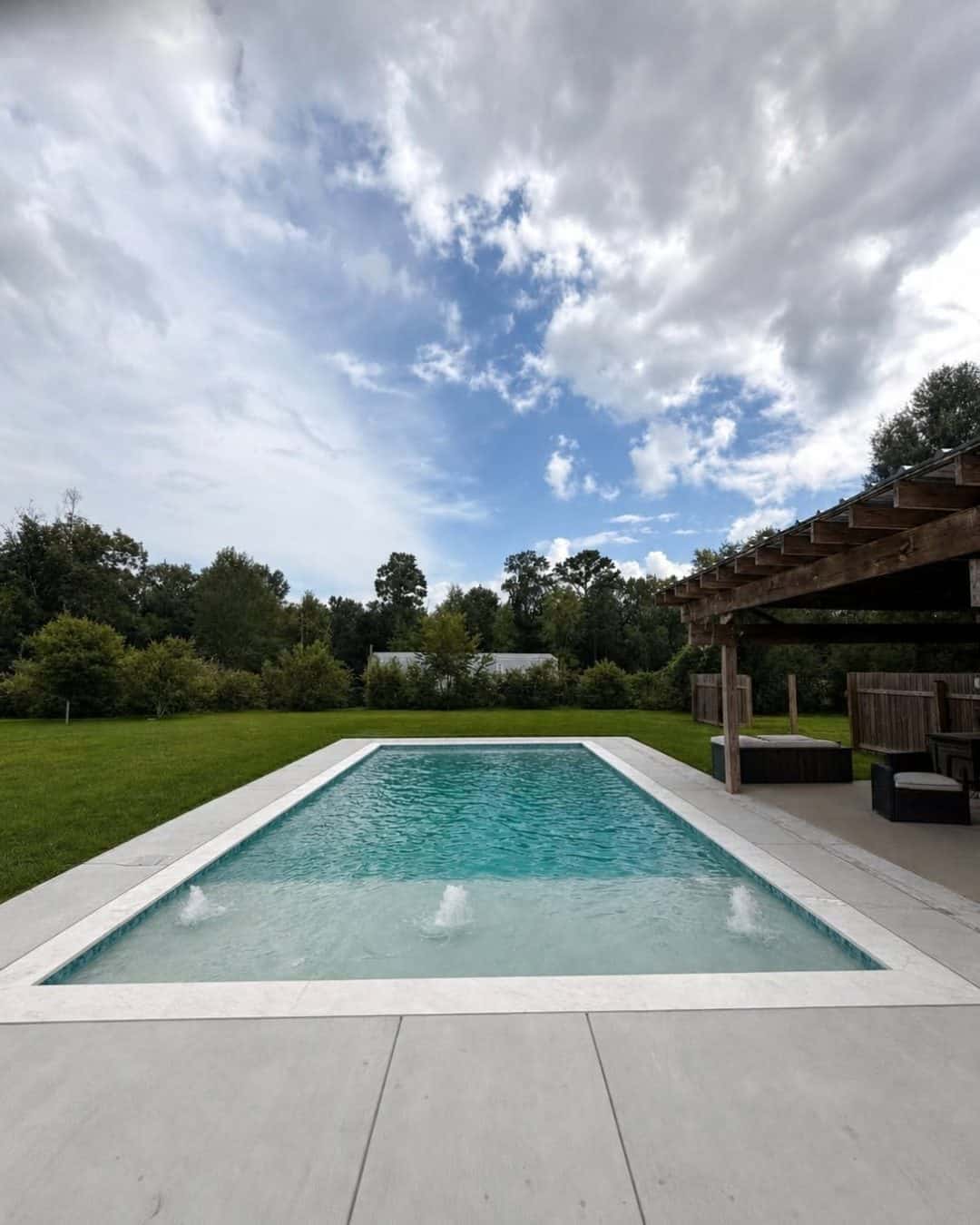
Plan the whole backyard before you build the pool, even if you build it in phases. Utility runs, deck elevations, and equipment placement are cheap to plan and expensive to redo.
Consider future additions now
If an outdoor kitchen, covered patio, or fire feature is anywhere on your wish list, sleeve the conduit and stub the gas and water lines during pool construction. Running them later means cutting your new deck.
Coordinate pool and patio design
The deck is part of the pool design, not an afterthought. Plan traffic flow between the back door, the pool, and any cooking or seating area, and leave enough deck for loungers on the sun side without crowding the walking path. Duplessis Pools designs integrated outdoor living spaces so pool, patio, and entertaining areas read as one layout.
Think about landscaping, privacy, and shade
Planting gives you privacy, shade, and softness against hardscape — but choose carefully. Species that shed heavily, drop needles, or have aggressive root systems create ongoing maintenance and, in the worst cases, deck damage. Discuss species and setback from the shell with your builder or a landscape professional before planting.
Making your final decision
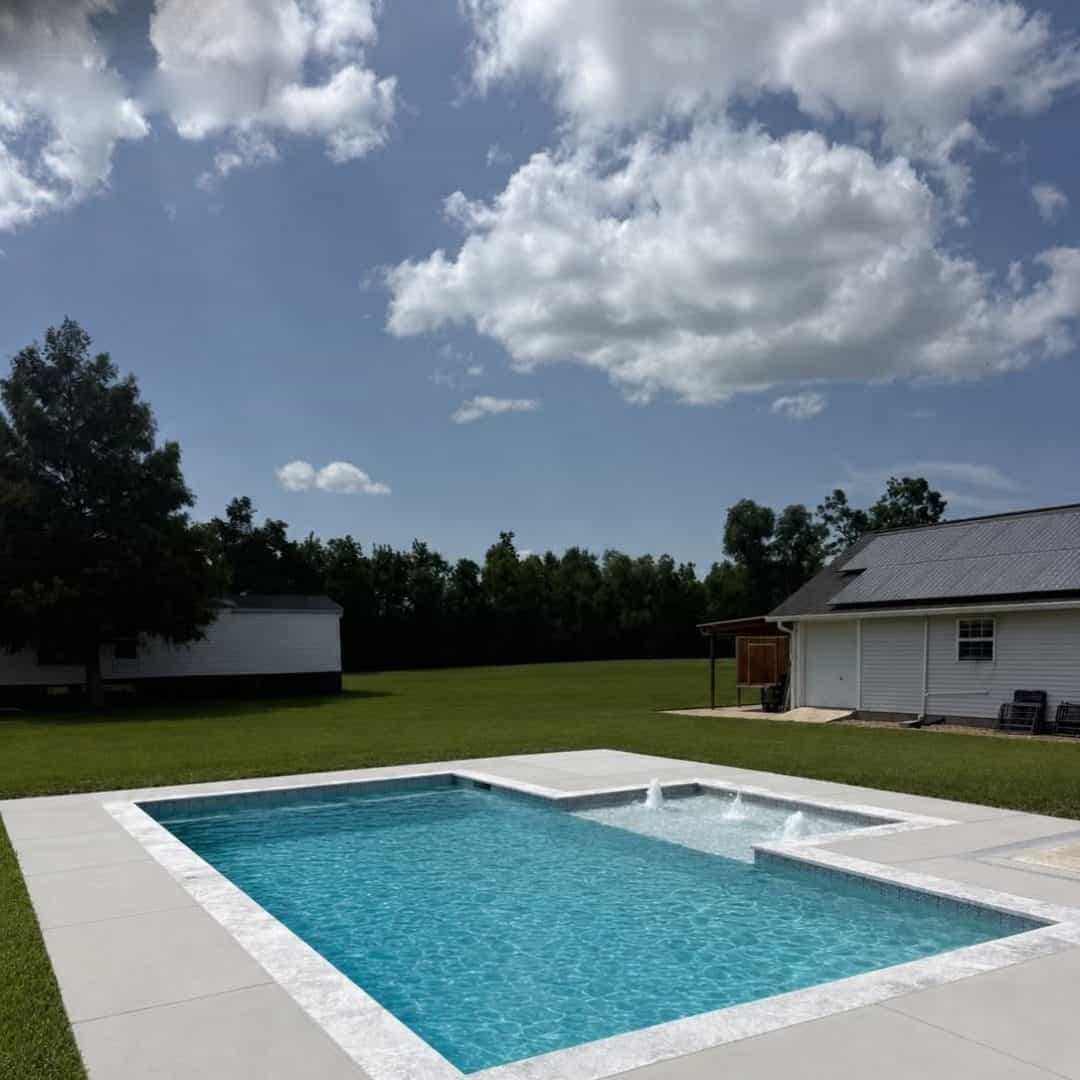
The right builder is usually the one who answered your questions most thoroughly, gave the most detailed estimate, and was most honest about what could go wrong. Price matters, but the lowest bid is rarely the best value once you account for gaps in scope and thin warranty terms.
Before signing, read the entire pool construction contract and confirm it reflects every promise made verbally. If anything is unclear or differs from your conversations, resolve it in writing first.
Then set the project up to succeed: clear the yard and the access path, confirm how you want to receive updates, and agree on who to call with questions. A new pool changes how you use your home — taking the time to choose the right builder is what makes that change the one you pictured.
Ready to start? Browse the Duplessis Pools gallery or request a design consultation to see your backyard in 3D before a shovel touches the ground.
FAQs: choosing a Baton Rouge pool builder in 2026
How long does it take to build an in-ground pool in Baton Rouge?
A custom gunite pool typically takes 8 to 12 weeks from excavation to completion, plus 1 to 4 weeks of permitting beforehand. Fiberglass pools install faster, often in 4 to 6 weeks, because the shell is manufactured off site. Weather, plan-review backlogs, and site conditions are the most common causes of delay. Duplessis Pools manages each phase and sets realistic timelines upfront.
What permits do I need for a pool in East Baton Rouge Parish?
An in-ground pool requires a building permit for the pool structure, an electrical permit for pumps, lighting, and bonding, and often a separate fence or barrier permit. Decking, gas lines, and covered patios may be permitted separately. Most of the parish is served by the City-Parish Department of Development at 300 N. 10th Street, while addresses in the City of St. George permit through St. George. Duplessis Pools handles permit applications and inspection coordination as part of its service.
How tall does a pool fence have to be in Baton Rouge?
In East Baton Rouge Parish, the pool barrier must be at least 48 inches above grade, with no opening that passes a 4-inch sphere, a maximum 2-inch gap beneath it over unpaved ground, and self-closing, self-latching gates that swing away from the pool. The City of St. George requires a minimum 60-inch barrier at final inspection. The barrier must be complete before the pool can be approved for use.
What is included in a full-service pool installation?
Full-service installation covers design consultation, permitting, excavation, shell construction, plumbing and electrical, equipment installation, decking, interior finish, startup, and homeowner training. Duplessis Pools includes excavation, permitting, electrical hookups, and equipment in its all-inclusive packages, which removes most sources of surprise cost.
How do I compare pool builder warranties?
Compare structural, surface, and equipment warranties separately, since each is typically backed by a different party. Ask about coverage duration, what voids the warranty, whether it transfers to a new owner, and how claims are filed. Duplessis Pools offers extended workmanship warranty options up to four years, beyond standard manufacturer coverage.
Should I choose a gunite or fiberglass pool?
Choose gunite for full customization of shape, size, depth, and features; choose fiberglass for a faster installation and a smooth, low-maintenance surface within predetermined shapes. Gunite suits homeowners prioritizing design freedom and long-term refinishing options, while fiberglass suits those prioritizing timeline. Duplessis Pools builds both.
What questions should I ask a pool builder before signing a contract?
Ask who pulls permits and schedules inspections, exactly what the estimate includes and excludes, warranty terms and who backs each part, whether payments are tied to milestones or dates, how change orders are priced, and what support exists after completion. A thorough builder welcomes all of these. Duplessis Pools encourages homeowners to visit the gallery and showroom to review options in person.
How much does an in-ground pool cost in Baton Rouge?
Cost depends on size, construction type, features, decking, and site conditions, so the only reliable number comes from an itemized estimate after a site visit. When comparing quotes, normalize them by scope — confirm each one includes excavation and spoil removal, electrical hookup, decking, the safety barrier, permit fees, and startup before you compare bottom-line figures.
